
Europe has never invested more resources in fighting drugs. Customs agencies deploy increasingly sophisticated scanning technologies, ports cooperate across borders, law enforcement agencies exchange intelligence in real time, and governments continue to expand efforts against organised crime. Yet the European Drug Report 2026 paints a striking picture: drugs remain widely available, criminal markets continue to innovate, and new substances appear faster than regulators can respond.
The report was not written as a critique of prohibition. Yet many of its findings raise important questions about the effectiveness of current policies and point towards the growing importance of public health and harm reduction responses.
1. Drug Markets Are Thriving Despite Decades of Supply Reduction
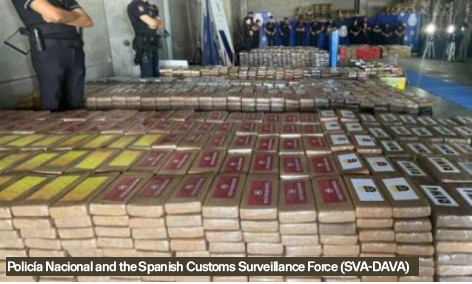
If there is one overarching message in the report, it is that Europe’s illicit drug market remains remarkably resilient despite decades of increasingly sophisticated enforcement. Cocaine provides perhaps the clearest example. Global cocaine production has reached record levels, wastewater monitoring shows increasing consumption in many European cities, and the drug remains widely available throughout the continent.
This is happening despite massive investments in customs operations, intelligence-sharing, international cooperation and port security. Although EU Member States seized 330 tonnes of cocaine in 2024, down from 419 tonnes in 2023, the report offers little evidence that enforcement has fundamentally altered the availability of the drug. Instead, cocaine continues to reach European consumers in large quantities.
Cannabis tells a similar story. An estimated 15.4 million young adults aged 15–34 used cannabis in the past year, making it by far the most commonly consumed illicit drug in Europe. While prevalence has largely stabilised, the market itself continues to expand and diversify. In 2025, authorities in Antwerp and Rotterdam each seized approximately 21 tonnes of cannabis originating primarily from Canada, illustrating how globalised cannabis supply chains have become.
Perhaps the most striking evidence of market resilience is diversification. A generation ago, Europe’s illicit market was largely dominated by cannabis, heroin, cocaine, amphetamine and MDMA. Today it includes synthetic cathinones, synthetic and semi-synthetic cannabinoids, nitazene opioids, diverted medicines and counterfeit pharmaceuticals. Synthetic cathinones barely existed on European markets twenty years ago. Today they represent one of the fastest-growing stimulant categories, with India identified as a major source of production. Rather than shrinking, Europe’s drug market has become larger, more diverse and more sophisticated.
2. Prohibition Creates a Constant Cycle of Innovation

The report repeatedly documents something that will be familiar to anyone who has followed drug policy over the last three decades: every successful enforcement measure seems to trigger a new wave of adaptation.
As authorities increased controls at major ports such as Antwerp and Rotterdam, traffickers diversified their routes and methods. Rather than relying solely on large shipments hidden in containers, criminal organisations increasingly use smaller ports, offshore transfers, semi-submersible vessels, drones and sophisticated concealment techniques. Cocaine is now frequently imported not only as finished powder but also as cocaine paste, cocaine base or chemically concealed within legitimate commercial products before being extracted in clandestine European laboratories.
The same process can be observed in drug production. The report describes what amounts to a chemical arms race. When authorities prohibit one psychoactive substance, producers introduce a slightly modified alternative. When precursor chemicals are controlled, manufacturers switch to new ingredients and production methods.
The emergence of semi-synthetic cannabinoids provides a textbook example. Following the international control of HHC, a range of new semi-synthetic cannabinoids rapidly appeared on European markets. These compounds are now sold in vapes, gummies and other products despite very limited knowledge of their long-term health effects. Regulators find themselves constantly pursuing substances that did not exist a few years earlier.
Perhaps the greatest irony is that prohibition may create incentives for increasingly potent products. Traffickers prefer substances that are easier to conceal, transport and profit from. This economic logic helps explain the emergence of highly potent nitazene opioids, synthetic cannabinoids and concentrated cannabis extracts. Smaller quantities generate larger profits while reducing transportation risks.
3. The Greatest Risks Increasingly Come from an Unregulated Market
Many people assume that the greatest dangers associated with drugs arise from the substances themselves. Yet one of the most important lessons of the report is that many contemporary harms arise from uncertainty.
Across Europe, people are increasingly exposed to synthetic cannabinoids sold as cannabis, novel opioids sold as heroin, counterfeit medicines and products containing unexpected adulterants. The report repeatedly warns about unknown potency, dangerous mixtures and substances being misrepresented to consumers.
The emergence of nitazene opioids provides a particularly powerful example. The danger is not simply that these highly potent substances exist. The danger is that someone expecting heroin may unknowingly consume a nitazene. Similarly, synthetic cannabinoids sold as natural cannabis have caused severe poisonings because users consume doses appropriate for cannabis but inappropriate for compounds that may be dozens of times more potent.
Cannabis itself illustrates the broader trend. Today’s market includes herbal cannabis, resin, concentrates, extracts, edibles, synthetic cannabinoids and semi-synthetic cannabinoids. Consumers increasingly encounter products with unfamiliar ingredients, unpredictable potency and limited scientific evaluation.
In other areas of consumer protection, governments require ingredient labels, quality standards, product recalls and manufacturing oversight. None of these protections exist in illicit drug markets. From a drug policy reform perspective, this leads to an important conclusion: many contemporary drug harms are not solely caused by pharmacology. They are amplified by the absence of regulation. The report does not explicitly advocate regulation as a solution, but it repeatedly documents problems that arise precisely because such protections do not exist.
The European Drug Report 2026 highlights growing concerns about violence linked to cocaine trafficking, corruption in ports and the recruitment of vulnerable young people into criminal networks. While psychoactive substances themselves do not inherently generate violence, prohibition creates highly profitable illegal markets in which criminal organisations compete for territory, routes and customers outside the rule of law.
4. Harm Reduction Continues to Outperform Ideology
While illicit markets are innovating rapidly, the report documents a more hopeful trend: harm reduction is innovating too.
Across multiple chapters, the report identifies opioid agonist treatment, needle and syringe programmes, naloxone distribution, infectious disease testing, vaccination programmes and early warning systems as essential components of an effective response to drug-related harms. Unlike supply reduction efforts, these interventions have repeatedly demonstrated measurable success in reducing deaths, infections and suffering.
The report’s discussion of infectious diseases is particularly revealing. Countries that have invested in integrated harm reduction systems have achieved substantial progress in reducing HIV and hepatitis C transmission among people who use drugs. The report points to evidence that hepatitis C elimination is achievable through adequately funded programmes combining harm reduction, testing and treatment.
Perhaps most importantly, harm reduction itself is becoming increasingly innovative. Drug checking services are now integrated into broader monitoring systems alongside wastewater analysis, emergency department surveillance, syringe residue analysis and the European Drug Alert System. These tools provide near real-time information about emerging substances and dangerous contaminants, allowing services to respond far more rapidly than was possible a decade ago.
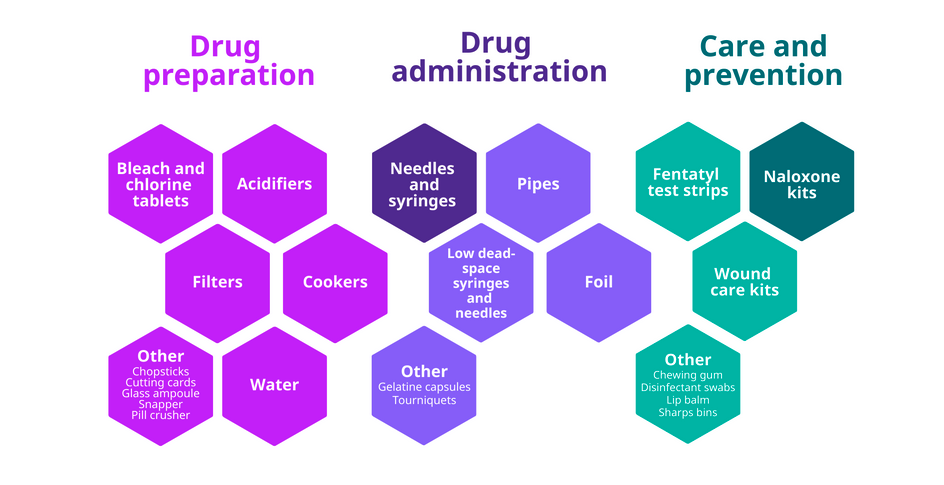
The report also highlights a growing recognition that harm reduction must adapt to changing patterns of drug use. Historically, most services focused on injecting drug use. Today, increasing attention is being paid to smoking, inhalation and vaping. Drug consumption rooms are adapting to the rise of stimulant use and non-injecting routes of administration, while the EUDA has developed guidance on the provision of equipment for safer smoking and inhalation. Harm reduction is increasingly characterised not by static service models but by continuous adaptation to changing drug markets.
In many ways, Europe is witnessing an innovation race. Traffickers are developing new substances, technologies and routes of distribution. Harm reduction services are developing new monitoring systems, new service models and new public health tools. The difference is that one side is measured in profits, while the other is measured in lives saved.
5. A Paradox at the Heart of European Drug Policy
Perhaps the most curious conclusion that emerges from the report is that while the evidence increasingly points towards the need for drug policy reform, the political direction of travel at the European level often appears to be moving in the opposite direction.
Many of the report’s findings support approaches associated with public health, harm reduction and regulation. The report documents the resilience of illicit markets despite decades of supply reduction efforts, highlights the risks created by unregulated drug markets, and points to the effectiveness of interventions such as opioid agonist treatment, naloxone distribution, drug checking services and drug consumption rooms. Yet the dominant political response at both EU and national levels remains heavily focused on organised crime, security threats and law enforcement.
This trend is reflected in the growing securitisation of drug policy. Concerns about organised crime, violence linked to cocaine trafficking, corruption in European ports and the recruitment of vulnerable young people by criminal networks have moved to the centre of political discussions. These are genuine problems that require attention. However, there is a risk that drug policy becomes increasingly framed as a security issue, while its social and health dimensions receive less visibility and fewer resources.
The contradiction is visible in the European Union’s own policy framework. While EU institutions continue to endorse balanced and evidence-based approaches in principle, recent policy developments have increasingly prioritised law enforcement, border security and organised crime. At the same time, many civil society organisations and service providers have raised concerns about the declining availability of dedicated European funding for harm reduction, social inclusion, community-based services and public health responses.
This raises an uncomfortable question. If the evidence presented in the report suggests that some of the most successful interventions are found in healthcare and harm reduction, why do political priorities increasingly emphasise enforcement and security? The answer may lie less in evidence than in politics. Organised crime, violence and trafficking generate headlines and political urgency. Harm reduction, by contrast, often succeeds quietly, preventing deaths and infections that never become visible.
Exploring Alternatives to Prohibition
Although the European Drug Report 2026 is not a manifesto for reform, it documents a Europe that is increasingly experimenting with alternatives to traditional prohibition.
Cannabis policy provides the most visible example. Malta, Luxembourg, Germany and Czechia have all introduced reforms allowing some form of home cultivation for personal use. Germany and Malta have established regulated cultivation associations, while the Netherlands is experimenting with a regulated cannabis supply chain serving licensed coffeeshops. These initiatives differ considerably in design, but they share a common premise: if cannabis remains widely available despite prohibition, governments may achieve better outcomes by regulating parts of the market rather than leaving them entirely in the hands of organised crime.
More broadly, the report documents a gradual shift away from viewing drug policy solely through a criminal justice lens. Drug checking services, supervised consumption facilities, heroin-assisted treatment, naloxone distribution and other harm reduction measures all represent attempts to manage risks rather than simply prohibit behaviours.
The most important lesson of the European Drug Report 2026 may be that drug markets have adapted to prohibition far more successfully than prohibition has adapted to drug markets. While traffickers continually innovate with new substances, routes and technologies, the most successful public responses have come from a different direction: harm reduction, public health and pragmatic regulation. The question facing Europe is no longer whether drugs can be eliminated. The question is whether policymakers are willing to learn from the evidence about how their harms can be reduced.


