Visiting The Thistle: The UK’s First Legal Safer Drug Consumption Room in Glasgow
Step inside the UK’s first legal safer drug consumption room. In Drugreporter’s new video, Lynn MacDonald, service manager at The Thistle, takes us through a space built not only for life-saving safer use, but for compassion, dignity, and respect — putting care and humanity at the center of the service.
On the occasion of the Scottish Drugs Forum’sStop the Deaths annual conference in August 2025, we had the opportunity to visit The Thistle, which opened in January 2025 after more than a decade of legal battles. The service aims to address Scotland’s overdose crisis, prevent HIV transmission through shared needles, and reduce public injecting and discarded drug litter. What became clear during our visit was that Lynn MacDonald and the Thistle staff prioritise something people who use drugs in the UK too rarely experience when accessing services: being treated with dignity and respect. As Lynn explained:
“We are trying to create an atmosphere where people feel welcome, feel valued. They’re treated with dignity and respect when they come here. They’re welcomed as equals, no different to you or I.”
The Neighbourhood
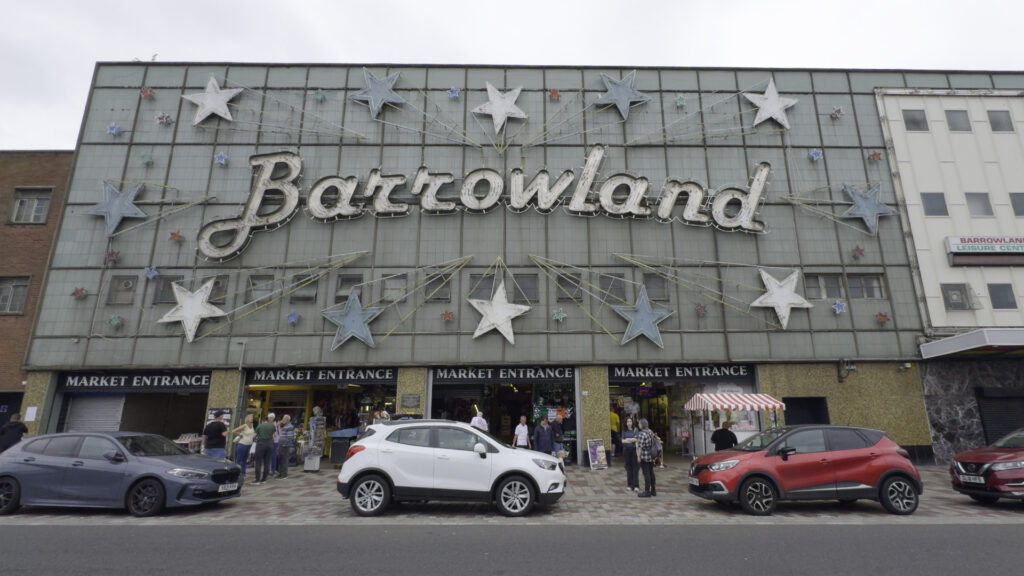
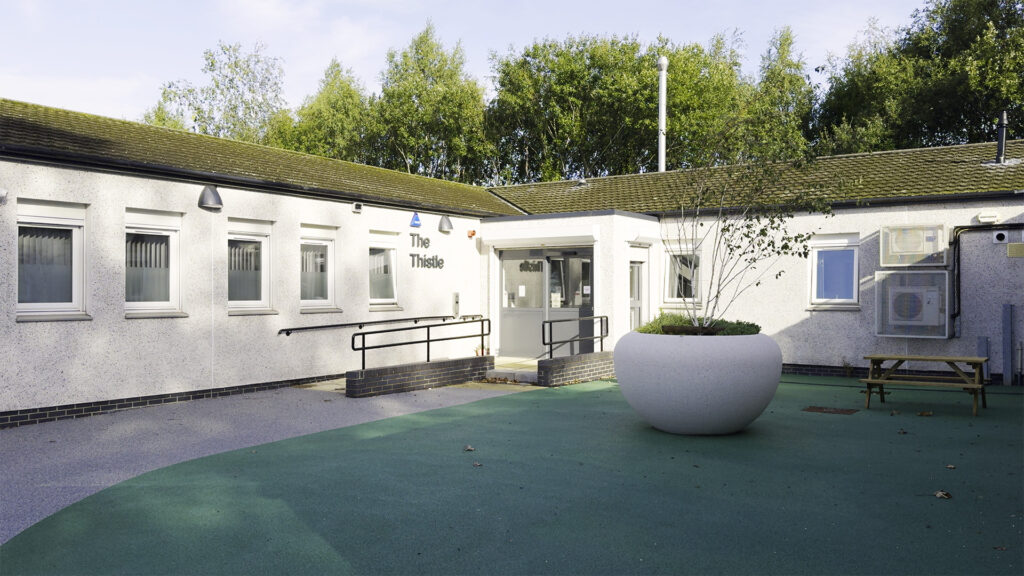
The Thistle is located in the Calton area of Glasgow, a neighbourhood facing high levels of deprivation, significant drug use, widespread injecting away from home, and large numbers of discarded needles in car parks and alleyways. The presence of existing drug and alcohol services in the area also made it a suitable location. The staff actively work to build positive relationships with local residents and respond to neighbourhood concerns. They have installed needle disposal bins in public spaces to reduce discarded paraphernalia. Interestingly, these bins have not only reduced needle litter but also provided a safe way for people to dispose of unused prescription medications.
Reception – Welcoming People
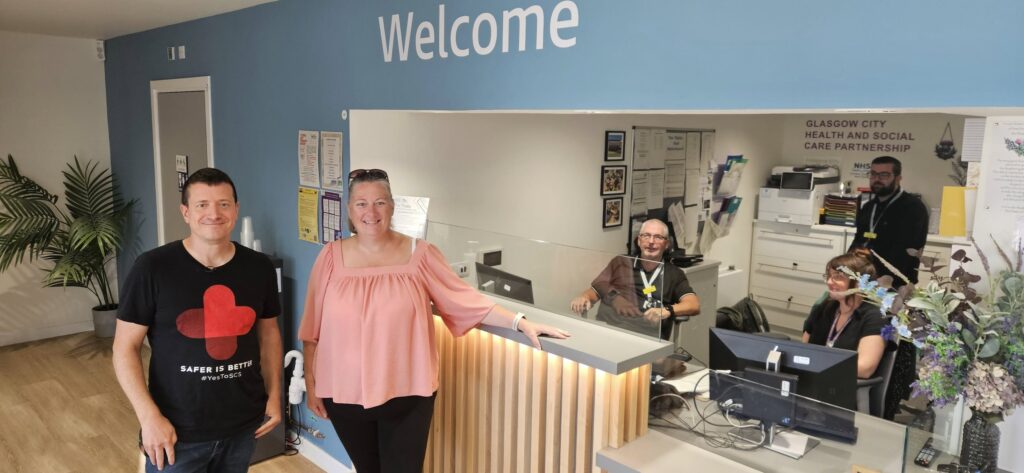
When people arrive, they are greeted by friendly staff, and anonymous registration takes only a few minutes. A lived and living experience group was involved not only in the design of the service and the choice of furniture, but also in the selection of Thistle staff — ensuring the space feels welcoming and respectful from the very first interaction.
Safer Drug Consumption Space – Preventing Overdoses, Reducing Infections, Building Trust
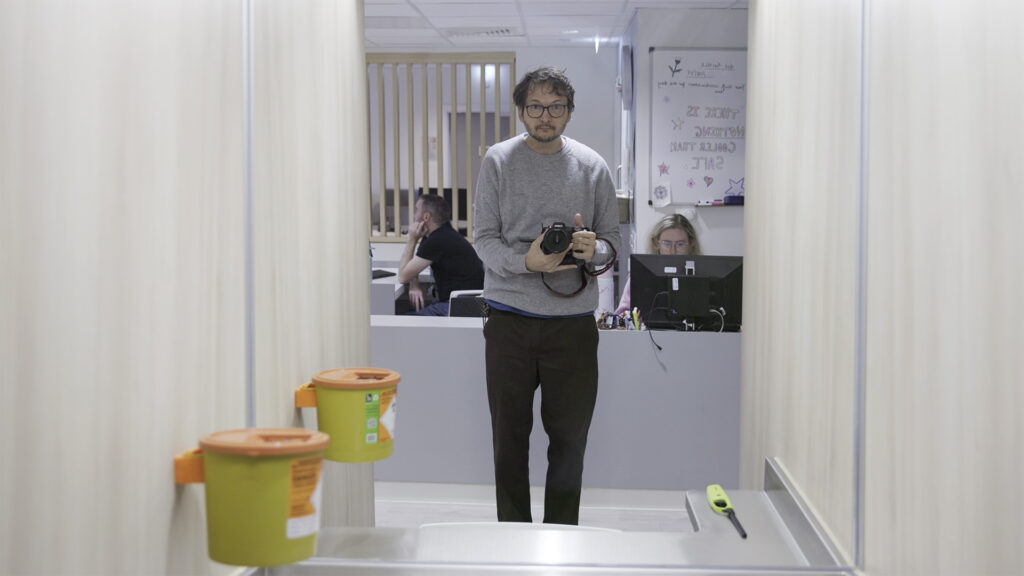
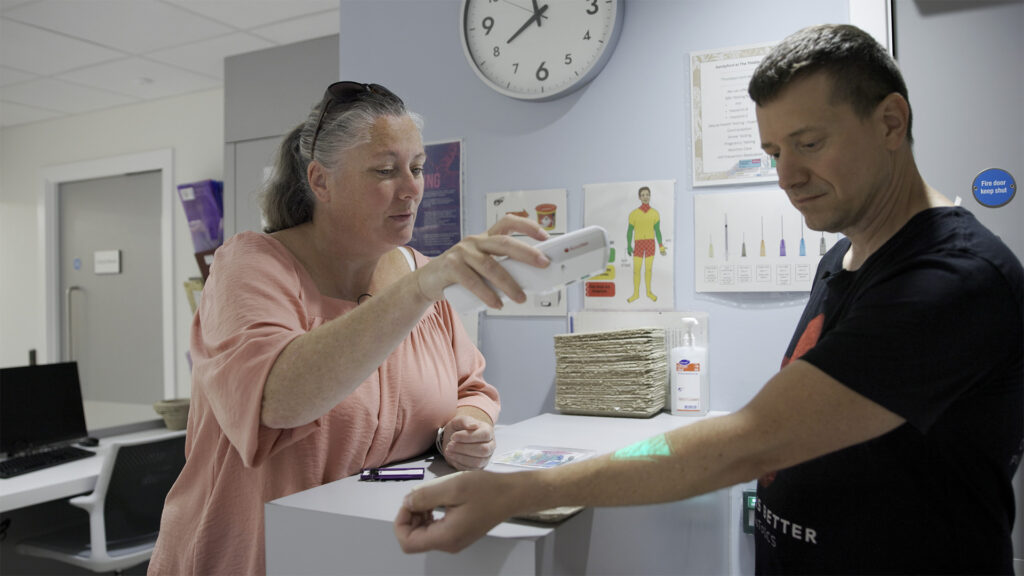
In the safer drug consumption space, everyone receives a single-use tray with sterile injecting equipment to consume drugs obtained outside the service. While staff are not permitted to physically assist with injecting, they provide advice and supervision. Staff may use a vein finder to help people identify healthier veins, reducing the use of riskier injection sites such as the groin. Dignity is central to the approach: the process is designed to be as non-intrusive as possible, allowing people time and privacy without pressure to rush. Care is trauma-informed, aiming to reduce shame and stigma both inside the service and in the wider community. In the event of an overdose, staff respond immediately — first using oxygen, and administering naloxone only when necessary. Since opening in January 2025, 51 overdoses have been reversed, all successfully resolved. The Thistle also enables rapid responses when the local drug supply becomes more toxic, allowing staff to warn people and other services quickly. As Lynn MacDonald explained:
“There was a batch of heroin that was extremely problematic. People were injecting and overdosing before they’d even finished the injection. So we were able to respond very quickly. And those people almost certainly wouldn’t have survived had they been somewhere isolated on their own.”
Recovery Area – Supporting People After Safer Consumption
After injecting — or even without using the consumption space — people can access wound care, sexual and reproductive health services, HIV and hepatitis C testing, and referrals to treatment. Vaccinations for hepatitis A and B, flu, and COVID are also available. In the recovery area, people can rest under nursing supervision while staff monitor oxygen levels, pulse, and temperature.
Lounge Area – Connecting People to Services, Housing, and Treatment
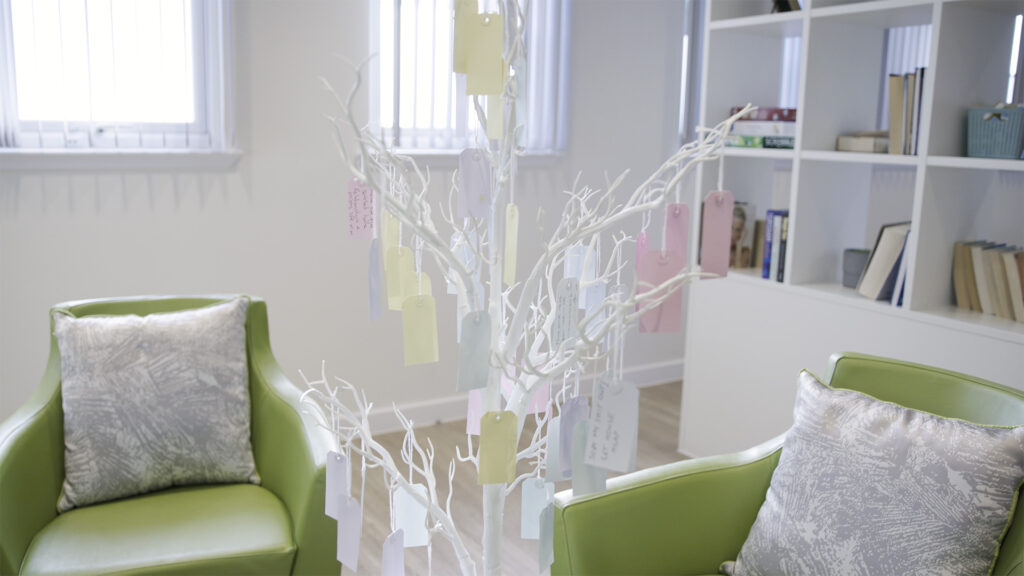
The lounge is a softer, less clinical space designed for people to spend time, read, do jigsaws, and have snacks. People can receive take-away foil, injecting equipment, condoms, and other harm reduction supplies. The Thistle can also be used as a mailing address for correspondence. Crucially, this is where people can speak with social workers and access a wide range of additional services. A core aim is to strengthen social connections and, where desired, help people reconnect with their families.
“Often what we hear from the family reference group — from mothers in particular — is that they’re waiting for that knock at the door from the police. They don’t know if their son or daughter is alive or dead. So we can say, ‘Do you want to phone your mum and let her know you’re here and you’re OK?’”
The Thistle’s users’ forum provides continuous feedback to improve services. Housing support is the most frequently requested need. The Thistle can connect people to Housing First projects and, in some cases, arrange hotel accommodation on the same day. Staff can also support access to abstinence-based treatment. In Scotland, same-day methadone access is available, meaning people can start treatment the day they request it.
Enhanced Drug Treatment Service – Prescribed Diamorphine for People with Complex Needs
Next door to The Thistle is the Enhanced Drug Treatment Service, also managed by Lynn MacDonald. The service offers heroin-assisted treatment for people who have not benefited from conventional treatment options or methadone maintenance. There are 40 places available, with prescribed diamorphine provided under medical supervision. The outcomes have been highly positive, with rapid improvements in participants’ quality of life.
Evaluation – What We’ve Learned So Far
The Thistle is subject to ongoing independent evaluation assessing outcomes and effectiveness. Early results are highly encouraging: over 4,000 injections did not take place in public spaces, did not result in blood-borne virus transmission, and did not involve reused needles. Fifty-one overdoses were reversed — many of which would likely have been fatal outside the service. The evidence already suggests reduced hospital admissions and significant cost savings for the wider health system. As Lynn puts it:
“People talk a lot about this service being expensive, but the reality is, we are saving other parts of the system an absolute fortune.”
The experience of The Thistle shows that safer drug consumption rooms are not radical experiments, but pragmatic public health responses grounded in evidence and compassion. By preventing overdose deaths, reducing infectious disease transmission, and reconnecting people to health, housing, and social support, The Thistle demonstrates what becomes possible when drug policy is built around care rather than punishment. At a time when drug-induced deaths remain high in Europe and recent data show increases in fatalities in some countries and from potent new synthetic substances, Glasgow’s model offers a concrete, life-saving blueprint for cities willing to act.
Text and video: István Gábor Takács Reporter: Péter Sárosi